

The first six chapters of “The Traitor” are
available to read on-line.
Copies of the book can be purchased from
LuLu.com : ISBN 978 1 4092 9076 6
(please click on the image)
Based on “Superior Force” the acclaimed
study of the escape of Goeben and Breslau
The Traitor is firmly grounded in fact. The majority of the people referred to in the novel took part in the
actions described. Many of the conversations are based on diary entries, memoranda and letters subsequently
published by the main protagonists. The principal exception to this is the character of Major Lionel Samson.
When he first appears, Samson is, as he was in fact at the time, the British Military Consul at the siege of
Adrianople in 1913. By 1915 he was, in real life, in charge of the allied espionage network based in Athens.
However, between these two dates, all actions ascribed to him in The Traitor are fictional. On the other hand,
the other main character, Admiral Mark Kerr is portrayed throughout as he was during the period. His
actions, however implausible, are firmly based on the research gathered for my non-fiction studies of the
events of this period, Superior Force, Straits and The Millstone.

Please feel free to read
this novel but note that
all rights are reserved
and that no part of this
publication may be
further reproduced by
any means without the
prior permission of the
author, Geoffrey Miller,
who has asserted his
right in accordance with
sections 77 and 78 of the
Copyright, Designs and
Patents Act, 1988 to be
identified as the author
of this work.


Contents and Design Copyright 2015 Geoffrey Miller


Contact Information
Telephone
01262 850943
International: + 44 1262 850943
Postal address
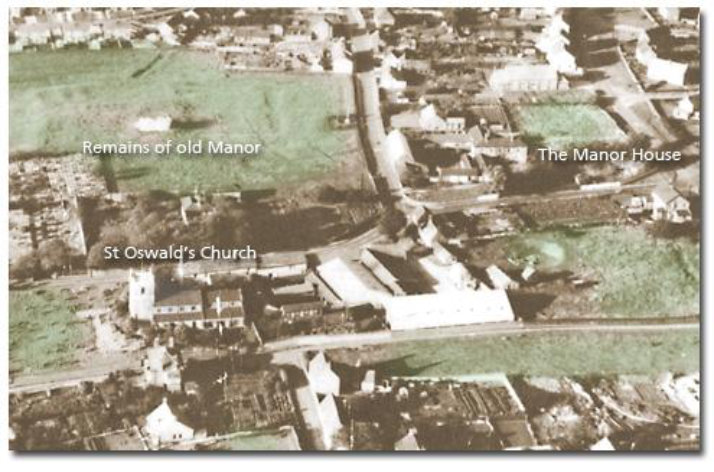
The Manor House,
Flamborough,
Bridlington,
East Riding of Yorkshire, YO15 1PD
England.
E-mail
gm@resurgambooks.co.uk
THEME
During the first week of August, 1914, Admiral Mark Kerr faced a desperate choice: betray his conscience or
his country. It was a choice he faced in real life, where his attempt to reconcile the competing demands of his
service to Britain and Greece failed. Major Lionel Samson’s principal experience of betrayal stemmed from a
more personal encounter: an affair which ends when fate (according to Edith Roberts) intervenes. The sense
of loss — and betrayal — Samson feels is heightened as, at that time, he does not believe in fate, or the pre-
ordained workings of some exterior force, either for good or evil. Forced to reconsider his own deeply held
beliefs, Samson is also disillusioned when everyone he encounters in Athens appears to operate on two
different levels, and betrayal, at both personal and official levels, is rampant. Professor Geroulanos, for
example, while certainly calling himself a Greek patriot, belongs to an organization whose only aim is the
furtherance of German influence in his country (another example of the activities of a real-life character
being mirrored in The Traitor).
Even within the confines of the British Legation Samson comes to suspect that senior officials are hiding
something. And, finally, the agent he employs is also working for someone else. Samson is forced to consider
the prospect that the ability to betray, to lie at will, is part of man’s nature. Then, however, his life is saved by
the same Professor Geroulanos he suspects of treason; his closest ally within the Legation is converted to
share his suspicion regarding the Greek Premier; and his own agent, the Greek porter, posthumously
provides the evidence to help resolve the final part of the puzzle — the identity of the traitor. Samson is
almost re-converted into disbelieving the workings of a malign fate until a moment’s cowardice, which he
later excuses by reasoning it was pre-ordained, results in his final test.
CHARACTERIZATION
With only a few exceptions, all the characters portrayed in The Traitor are based on their real-life
counterparts. There is so much material on Churchill, in particular, that it is possible to reconstruct his
activities and conversations on an almost daily basis. All the Greek characters (Premier Venizelos, King
Constantine, Professor Geroulanos, the investigator Triantafyllakos, the porter at the German Legation) are
portrayed as they were, as are such other notables as Sir Edward Grey and Prince Louis of Battenberg. The
principle deviation from this is the character of Major Samson. Physically he appears in the novel as he did in
real life; however his actions for the period involved (March 1913 to August 1914) are completely fictional.
Similarly, the activities in the novel of the real-life German agent, Captain Alfred Hoffmann, are fictional.
Edith Roberts and Rachel Summers are also wholly fictional characters.
Chapter 1 The Disappearance
Chapter 2 Rusa Bay
Chapter 3 Salonica
Chapter 4 Whitehall
Chapter 5 The Enchantress
Chapter 6 Avret Hissar
Chapter 7 Scutari
Chapter 8 The Secret Meeting
Chapter 9 The Offer
Chapter 10 The Pension Merlin
Chapter 11 The Stooped Man
Chapter 12 Professor Geroulanos
Chapter 13 The Missing Report
Chapter 14 The Greek Colonel
Chapter 15 Visarionos Street
Chapter 16 A Death
Chapter 17 The Asylum
Chapter 18 Motives
Chapter 19 An Intruder
Chapter 20 The Piraeus
Chapter 21 The Fatal Meeting
Chapter 22 Allegiances
Chapter 23 The Journey
Chapter 24 Naval Matters
Chapter 25 A New Beginning
Chapter 26 The Notebook
Chapter 27 Departure
Chapter 28 Constantinople
Chapter 29 The Banquet
Chapter 30 Return to Athens
Chapter 31 The Adramyti Plan
Chapter 32 War
Chapter 33 Bogados
Chapter 34 Messina
Chapter 35 The Traitor
Chapter 36 The Last Letter