|

|
|
|
|
 |
STRAITS : British policy towards the
Ottoman Empire and the Origins of the
Dardanelles Campaign © Geoffrey Miller |
|
|
 |
 |
|
Table of Contents
|
| |
|
|
Chapter
|
Contents
|
Illustrations |
|
|
|
|
|
Part I
|
TURKEY
|
|
|
Please click on a chapter number or title to go directly to that chapter.
The illustrations below are shown full size in the relevant
chapter.
Click any illustration to view full size,
then use the
'back' button to
return.
|
|
1
|
Abdul the Damned
|
|
|
|
The reign of Abdul Hamid
— the Russo - Turkish war of 1877 — Britain
intervenes — the fleet at the Dardanelles — the Congress of Berlin —
progress and despotism — the wrong horse — the Mediterranean agreements
of the 1890s — Germany steps in to fill the breach — the
concession for the Baghdad Railway — the threat from Russia — the new
strategic alignment.
|


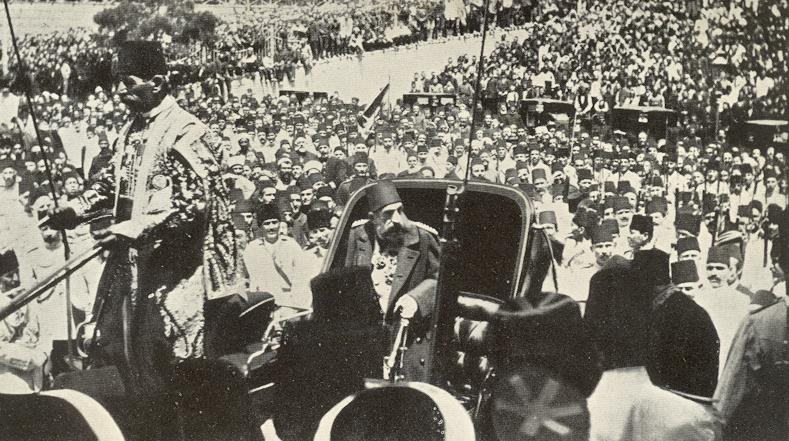
Sultan Abdul Hamid & Midhat Pasha |
|
|
|
|
|
2
|
The
Young Turks
|
|
|
|
The defence of Egypt — Military apprehension
regarding close Turco - German ties — the 1906 C.I.D. debate on war with
Turkey — the question of the Dardanelles — a difference of opinion
within the Navy — the view from the Foreign Office — the General Staff
appreciation — intelligence gathering — the malign influence of Gerald
Fitzmaurice — unrest within the Empire — the Anglo - Russian
Agreement — the signal for the revolution — a guerilla campaign —
the British Embassy caught on the hop — Fitzmaurice’s appraisal —
the constitution is reinstated — hopeful signs of improved Anglo -
Turkish relations — Grey’s fears — his instructions to the new
Ambassador.
|


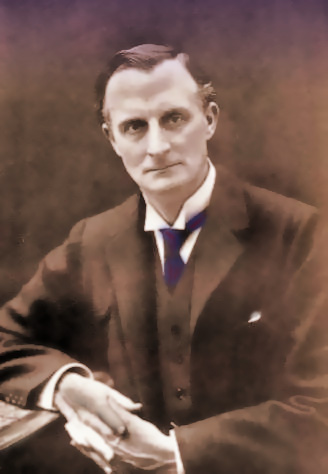
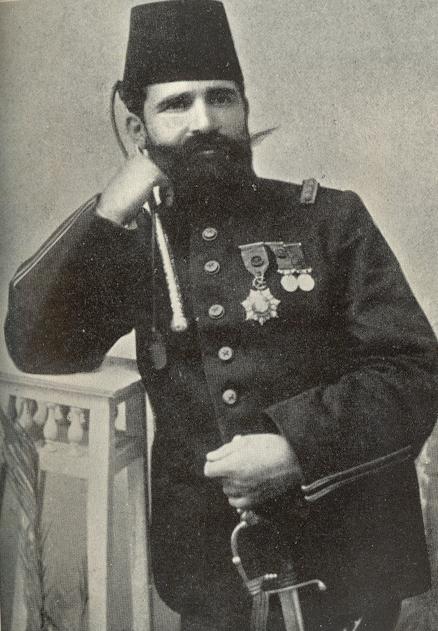
Sir Edward Grey & Major Niazi Bey |
|
|
|
|
|
3
|
Revolution and Counter-revolution
|
|
|
|
The new regime — an early test — the secret Austro
- Russian agenda — the Bosnian crisis — Isvolsky thwarted — Russia
reconsiders her relations with Turkey — the demand for a Conference —
the awkward question that has come too soon — Isvolsky’s new proposal —
his threat — Cabinet considers and rejects the latest proposal — the
question of reciprocity — the Straits memorandum — the hope that
the question may now be postponed — a Conference or direct negotiations?
— Isvolsky’s delicate position — the Turks seek assistance — a Balkan
entente? — an offensive alliance — the first signs of reaction — the
difficulty of dealing with the Committee — Parliament re - opens — a
breakthrough — the Austro - Turkish Protocol — an ingenious idea — the
Turks hold out for more.
|

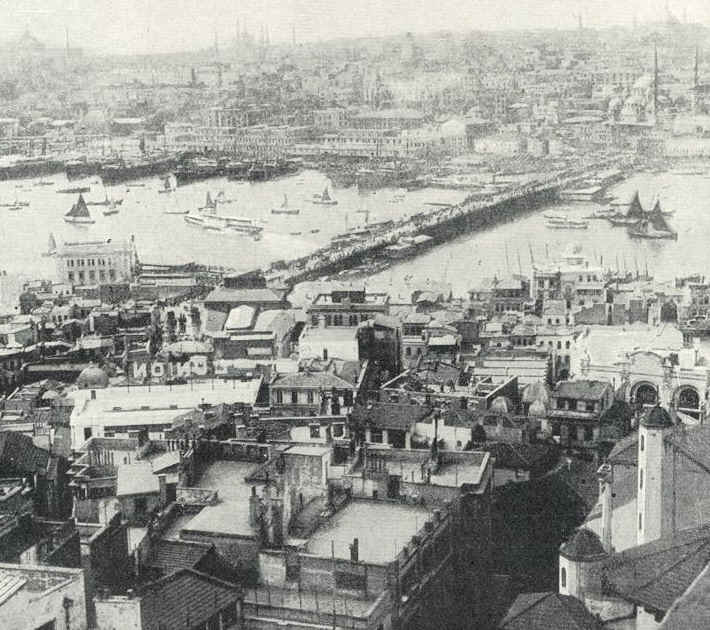
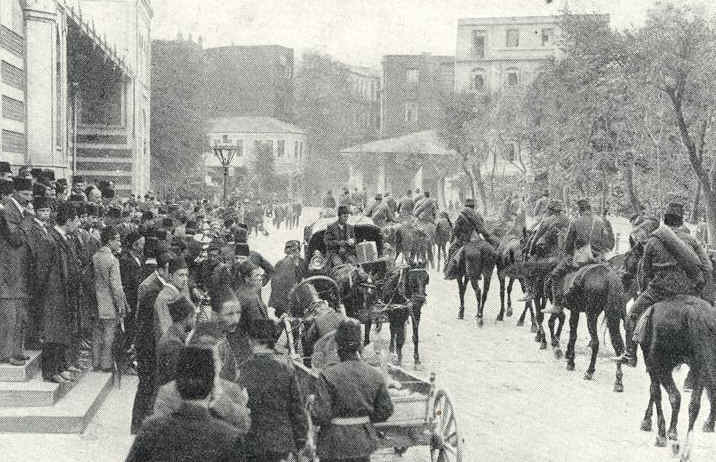
Constantinople in 1908 |
|
|
|
|
|
4
|
A Chance is Lost
|
|
|
|
A Japanese analogy — the appointment of a British
Naval Mission — more anxiety over German influence — the Baghdad Railway
controversy — Kiamil overreaches himself — a game of bluff — the Russo -
Turkish Protocol — the Conference proposal shelved — Nicolson
advocates an Anglo - Russian alliance — Grey’s refusal — Hardinge’s
attitude — the counter - revolution — the Action Army marches — the
demise of Abdul Hamid — Lowther’s patronizing attitude — the Young
Turks are granted a second chance — Lowther fights back — Austrian
ambitions satiated — Isvolsky embittered — the devil you know. |

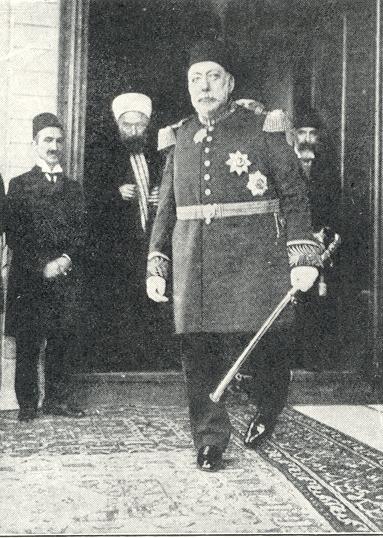
The new Sultan |
|
|
|
|
|
5
|
Railways and Navies
|
|
|
|
The attempt to separate army from politics — Ottomanization versus
Turkification — the C.U.P. splinters — a British railway — British
penetration into Mesopotamia — a new naval programme — a British snub —
relations deteriorate — the threat of Pan - Islamism — a change of
emphasis in Russia — foreign money — a scheme to employ German naval
officers is nipped in the bud — a new realism — the Baghdad Railway
reconsidered — Italy jumps the gun.
|

Enver Pasha |
|
|
|
|
|
6
|
The Turks Attract No Bids
|
|
|
|
The Turco - Italian War — opening shots — Italy
alienates her friends — the Foreign Office remains faithful — the
Turkish appeals for intervention — an effective guerrilla war — the
Tcharykov intrigue — a Turkish offer of alliance — Churchill’s advocacy
— Grey adopts a conciliatory line — the Admiralty is unconcerned — who
will make the first move? — a new Russian initiative — the Russian
Ambassador is disowned.
|

Tewfik Pasha |
|
|
|
|
|
7
|
A Harmless Sort of War
|
|
|
|
The war does little damage — the hunt for
scapegoats — attacks upon the C.U.P. increase — the ‘Big Stick’
election — Italy steps up the war — a pointless attack — a small victory
for the Concert of Europe — a Russian volte - face — the Dodecanese
occupied — the British position — Foreign Office concerns over the
evacuation of the Mediterranean — Crowe’s memorandum — the C.U.P. is
overthrown — a short - lived peace is achieved.
|

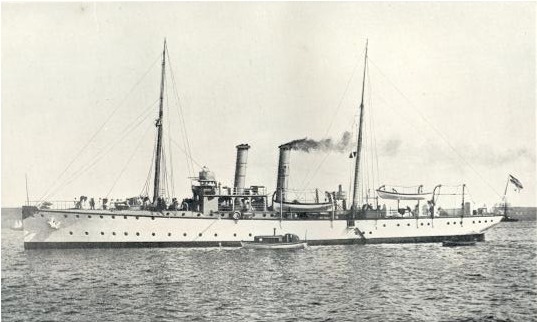
German gunboat Panther |
|
|
|
|
|
8
|
A Dangerous Season
|
|
|
|
Internal unrest — the Balkan League — the not - so
- secret treaty — the First Balkan War — the Turks are routed —
the fall of Constantinople looms — a new Grand Vizier — the delicate
British position — a Russian over - reaction — the Turkish line holds —
an armistice and a conference in London — a review of 1912 — new
proposals for the Baghdad Railway — the Conference reconvenes — the
problem of Adrianople.
|

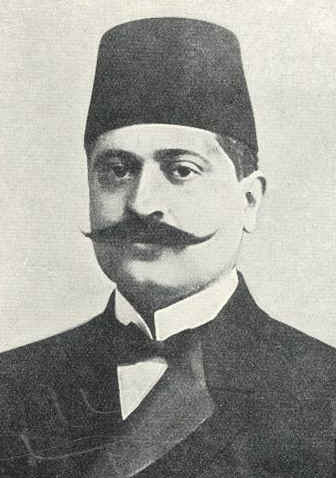
Talaat Bey |
|
|
|
|
|
9
|
Enver Intervenes
|
|
|
|
A coup is planned — the pretext — Enver and Talaat
act to prevent an ignominious peace — the personalities of Enver
and Talaat — a new reply is sent — hostilities re - opened —
Lowther grows weary — Fitzmaurice turns against the Ambassador — the
final battle for Adrianople — the fall of Adrianople — the Turks sue for
peace — the Treaty of London — the problem of the Aegean Islands —
a strong navy — British Naval Mission — Lowther’s alarming reports.
|

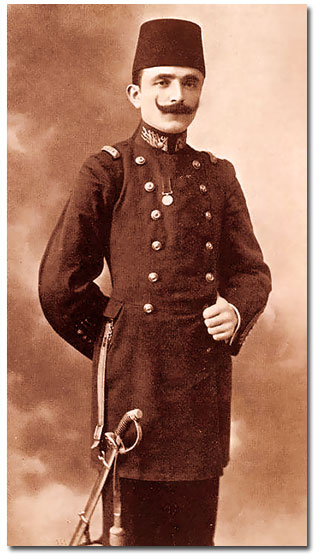
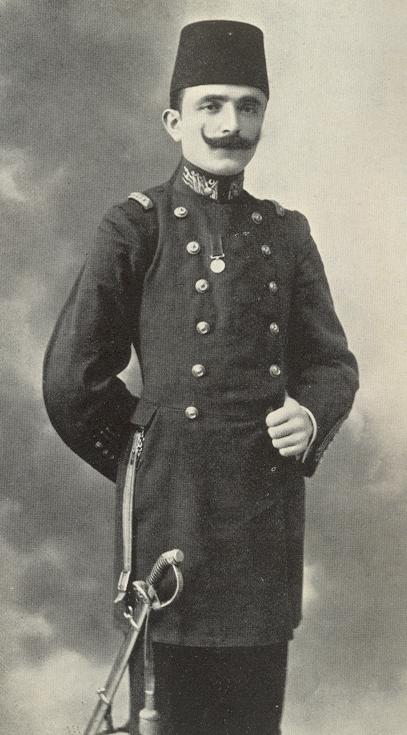
Major Enver Bey |
|
|
|
|
|
10
|
The Open Mind
|
|
|
|
Grey plans Lowther’s recall — Kiamil’s coup is
forestalled — the assassination of the Grand Vizier — the consolidation
of the C.U.P. — Talaat, Enver and Djemal come out into the open — a new
approach for a defensive alliance — the credentials of the Ambassador -
designate — the Second Balkan War — a Bulgarian miscalculation —
Adrianople is re - taken — the preservation of Ottoman integrity — the
Turks try the patience of the Powers — the problem of coercion — the
closed mind.
|

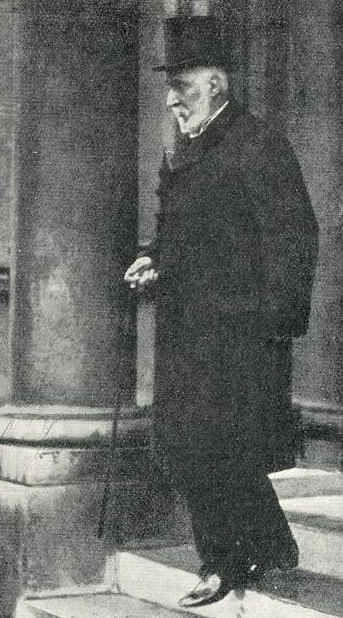
Kiamil Pasha |
|
|
|
|
|
11
|
The Mission
|
|
|
|
Mallet – a new direction? — the German Military
Mission — the appointment of Liman von Sanders — the Russian reaction —
the delicate British position — the difficulty of dealing with Sazonov —
the comparison with Limpus — Sazonov ups the stakes — the strength of
the Entente put to the test — a possible concession — Grey’s predicament
— Mallet’s conciliatory approach — German intelligence — the
collective inquiry to the Grand Vizier — Russia must be supported.
|


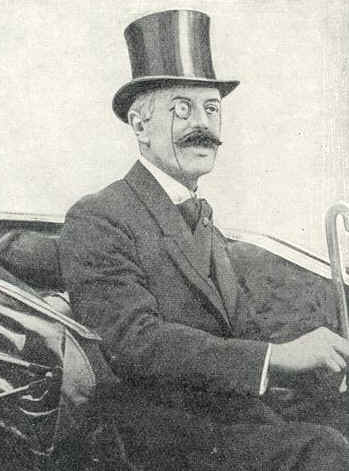
Louis Mallet and Liman von Sanders |
|
|
|
|
|
12
|
The Unhappy Plight of Admiral Limpus
|
|
|
|
Signs of a compromise — Enver becomes Minister for
War — Liman’s promotion — the crisis subsides — Russia considers her
options — Sazonov’s standing is lowered — pressure to strengthen the
Entente — the work of Admiral Limpus — the fate of the Brazilian
battleship — Turkey buys a dreadnought — the dockyard concession — a
rebuke — the Admiral’s disillusionment — Limpus attempts to leave.
|
|
|
|
|
|
|
13
|
Russian Machinations
|
|
|
|
The islands’ question — a new cause for concern —
Venizelos makes mischief — Liman exceeds his remit — the Straits are
strengthened — the Turks are annoyed, the British suspicious — a shift
in German policy? — the Russians take a pragmatic line — the limitations
of Russian foreign policy — the Turks offer an alliance — Sazonov
vacillates — Turkish naval building — tension with Greece — the
curious case of the fortuitously delayed dreadnought.
|
|
|
|
|
|
|
14
|
The
Alliance
|
|
|
|
The easing of local tension — another alliance
approach — changes in the Embassy — Fitzmaurice is forced out —
Mallet on leave — German doubts begin to surface — a decision is reached
— every rifle is required — the forced conversion of Ambassador
Wangenheim — the terms of the Treaty — Austria declares war on
Serbia — the Russian mobilization — Goeben is required — a
possible trade - off? — an alliance is concluded.
|
|
|
|
|
|
|
15
|
The Embargo
|
|
|
|
Churchill’s hand is forced — a deliberate act of
policy? — an inconvenient opinion — policy or piracy? — a race against
time — Raouf is dispossessed — the Turkish protest — Enver puts a price
on Turkish assistance — a double game — Turkish mobilization — the
Foreign Office abandons hope — Said Halim strikes a hard bargain —
conflicting reports — a convergence of opinion — the position becomes
clearer.
|
|
|
|
|
|
|
16
|
Negotiate and Temporize
|
|
|
|
Activity in Constantinople — a Bulgarian compact —
Enver’s unusual request — his motives examined — the Turks temporize —
continued anger at the pre - emption — Limpus desires to be recalled —
the question of payment — procrastination in London — Admiral Milne is
kept in the dark — a definite clue is received — no action is taken —
the performance of the Admiralty and Foreign Office — the conspiracy in
Athens.
|
|
|
|
|
|
|
17
|
The Bogus Sale
|
|
|
|
Earnest entreaties — where was Churchill? — good
news from Constantinople — the onerous burden of the Chargé D’Affaires —
a clearer indication of the Turkish attitude — the German ships
arrive — disbelief in London — final acceptance — a provocative
blockade? — efforts to keep Turkey neutral — Enver prevaricates —
sanctuary is granted — an inspired compromise — the reaction in
London — recognition of the fait accompli.
|


Djavid Bey and SMS Breslau |
|
|
|
|
|
18
|
The Turks Play a Double Game
|
|
|
|
Goeben’s new refuge — Souchon travels to
Constantinople — Sazonov reacts at last — Grey’s cautious approach
— Churchill’s personal appeal — the anomalous position of Admiral Limpus
— Limpus is sacked — Crowe’s intervention — a grand ceremony — solemn
assurances — strategic options — the difficulty of achieving surprise —
the trap for Souchon — Mallet returns — an immediate success — a
new pragmatism — an unwarranted complaint — an assurance is given —
Mallet is deceived.
|


Jihad proclaimed and Djemal Pasha |
|
|
|
|
|
19
|
The
Forward Policy of Winston Churchill
|
|
|
|
A generous offer? — who rules at the Porte? —
Djemal’s shopping list — patience wears thin — no effort is made
to repatriate the German crews — patience is exhausted — a signal to
attack — German gold to bribe the Turks — the mission of Admiral Guido
von Usedom — a plan for British action — Churchill applies the
pressure — the assurance to Greece — a less than generous offer — Talaat
springs a surprise — a new posting for Limpus — Mallet objects —
Churchill’s fury — an unsatisfactory arrangement — unseemly haste — the
Naval Mission departs — varied intelligence.
|

Churchill as First Lord |
|
|
|
|
|
20
|
The Last Hurrah for Said
Halim
|
|
|
|
The Dardanelles defences — unrelenting German
pressure — Enver’s authorization — a step too far — Said Halim rallies
support — the victory is short - lived — Mallet’s rebuke —
Churchill renews his attack upon Mallet — Carden’s new orders — a minor
incident — the Straits are closed — Mallet’s surmise — a lack of
suitable agents — Talaat, the pivotal figure? — Kühlmann’s mission —
Enver’s mercenary suggestion — Germany buys Turkish action — hope is
abandoned in London.
|

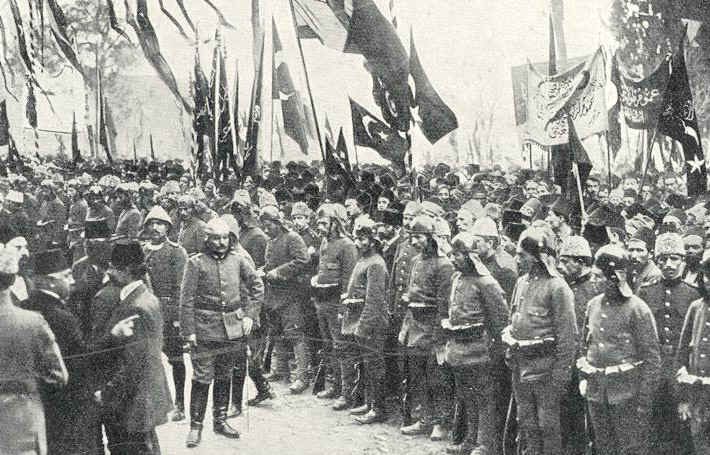
Turkish troops leaving for the front |
|
|
|
|
|
21
|
The Private War
|
|
|
|
Mallet stakes all — Enver’s secret arrangement — the German plan — the
bombardment — the burden of uncertainty is lifted — a fatuous
demand — last minute Turkish doubts — no disavowal is possible — the
Embassy staffs depart — Foreign Office policy is defended —
Sazonov hesitates — the formula of Ottoman integrity is abandoned —
Churchill’s prompt blow — change at the Admiralty — Fisher returns —
Limpus urges caution — a futile demonstration — its consequence — panic
in Constantinople — the declaration of war — Churchill orders a
repeat dose — the Turkish response — Churchill prevaricates — a private
war.
|


Said Halim and troops hearing the proclamation of a Jihad |
|
|
|
|
|
|
|
|
|
|
Part II |
A CABINET OF TIRED LAWYERS
|
|
|
|
|
|
|
22 |
The Lure of the Dardanelles
|
|
|
The attractions of the Dardanelles — a right and
obvious method — no army is forth - coming — the effect of Carden’s
lucky shot — Churchill’s volatile mind — the exploits of B11 and Doris —
the Turks under - estimated — the appalling prospect on the Western
Front — Hankey’s memorandum — Churchill’s option — Fisher’s caution —
competing projects — Lloyd George enters the fray — the higher direction
of the war — a Russian appeal — Enver takes charge — a Turkish
rout — Kitchener’s pessimism — no troops to spare — playing the
German game.
|

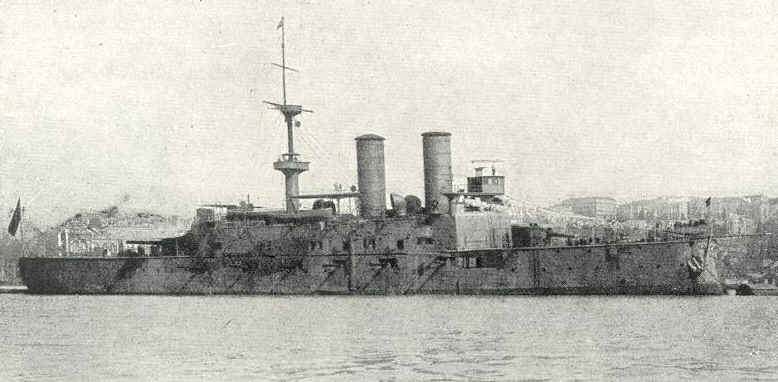
Turkish cruiser Messudieh |
|
|
|
|
23 |
Fisher’s
Folly
|
|
|
An important adherent — Fisher’s crucial
contribution — an important alteration — a gibe — its curious
effect — the inquiry to Carden — an alternative explanation — Northern
possibilities — a limited action? — planning for the Borkum operation
continues — Carden’s reply — its effect — Admiral Jackson’s cautious
appraisal — the question of timing — intelligence from
Constantinople — a window of opportunity — the debate in the War Council
— Kitchener now enthuses — Balfour is prescient but quiet — Fisher loses
his grip.
|

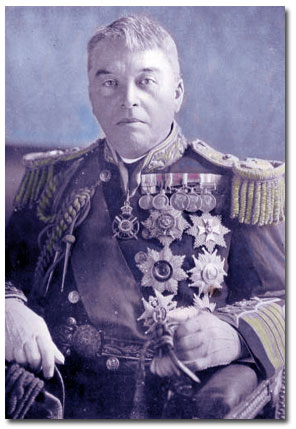
Admiral Sir John Fisher |
|
|
|
|
24 |
Conversion
|
|
|
A convergence of desires — Churchill holds to the
Northern option — Carden’s plan arrives — a novel suggestion from Fisher
— conflicting signals — Churchill’s bombshell in the War Council —
Asquith’s curious conclusions — the issue is fudged — Churchill
proposes, Fisher opposes — Fisher catches cold — his unease becomes
known — Hankey intervenes — send for Jellicoe? — Churchill acts to
silence the opposition — Fisher’s surprising reaction — a sad spectacle
— Hankey and Fisher collaborate — Churchill finds a scapegoat —
Asquith’s lapse of judgment.
|

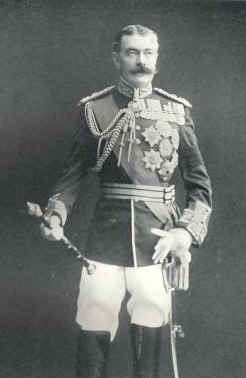
Kitchener of Khartoum |
|
|
|
|
25 |
Persuasion
|
|
|
Problems with the French — a rebuff — Grey’s support is
enlisted — a further precaution — Churchill cannot risk the French
obtaining command — The First Lord has his way — Augagneur is
convinced — the Grand Duke is dealt with — the Russians are surprised
— Fisher makes a stand — Asquith stands firm — a scene in the War Council —
Kitchener’s athletic intervention — were the risks made clear? — a trade -
off — Fisher’s reluctant acceptance.
|
|
|
|
|
|
26 |
Decision
|
|
|
An immediate meeting is convened — tacit acceptance
— the power of naval weaponry — a misapprehension — Hankey’s concern — a
new French initiative — the prevarications of Premier Venizelos — the
question of troops — a new offer to Greece — Hankey’s calculating
assent — Kitchener has second thoughts — pressure is applied — the
effect of the opening bombardment — troops are committed.
|
|
|
|
|
|
|
|
|
|
|
|
Part III |
OIL
|
|
|
|
|
|
|
|
|
|
27 |
The Oil Equation
|
|
|
A hidden agenda? — a Persian oil concession is granted
— Admiralty trials — oil to be used as an adjunct only — the competition is
eliminated — D’Arcy’s lack of success — Fisher, the oil maniac — the last -
minute strike — the new menace — Churchill, another convert — the Pakenham
Committee — the Royal Commission on Oil Fuel — a forgone conclusion? —
the quest for the Mesopotamian concession — Greenway’s alarming evidence —
Fisher is unconcerned — the advantages of oil — a surprise recommendation —
the Commission bites back — APOC vs. Shell — the question of price.
|
|
|
|
|
|
28 |
Admiralty and Oil
|
|
|
The Admiralty balks at Greenway’s terms — the need
for capital — Indian participation? — Churchill’s important
memorandum — competing standards — Churchill argues persuasively — the
debate is inconclusive — the decision to revert to coal in the Revenge
class — the Admiralty tries to enlist the support of the India
Office — the logical conclusion — the Admiralty enters the oil
business — the last opposition is silenced — Anglo - Turkish
negotiations — Admiral Slade’s commission — a multitude of applications
— a deal is done — the Fusion Agreement — a final complication.
|
|
|
|
|
|
29 |
A Hostage to Fortune
|
|
|
Anglo - Persian makes a move on the Mesopotamian
fields — the question of direct influence in Mesopotamia — the Admiralty
position — the Admiralty and Foreign Office clash — the problem of overt
British participation — the undesirability of reciprocal rights —
the negotiations stall — the finalization of the APOC deal — Churchill’s
five conditions — harsh criticism — appeasing the Russians and
Shell — the test of war — the British position in the Gulf secured — the
fate of Constantinople — Russian apprehension — confusion amongst
the allies — no way to run a war.
|
|
|
|
|
|
30
|
The Great Prize
|
|
|
The Director of Naval Intelligence and his private
initiative — the reappearance of Fitzmaurice — secret Anglo - Turkish talks
— something more than money — electrifying news — Fisher’s hasty reaction —
a secondary bombardment — an approach to the Vali of Smyrna — the promise of
a coup — Grey has no room to manoeuvre — the failure of these attempts — the
question of Greek participation — Grey’s innocuous statement — Russian
apprehension turns to alarm — fears of a separate peace — another sweeping
offer by Venizelos — the Russian veto — a compromise? — Foreign Office
objections — the issue is decided in Athens — the Tsar’s decree — a link
between Constantinople and Persia? — the Russian proposal is debated — a
quid pro quo — the fate of the neutral zone in Persia — the consideration of
British desiderata — summary.
|
|
|
|
|
|
31 |
Armistice
|
|
|
The Turks routed — Bulgaria sues for peace —
Turkish peace feelers — the troublesome question of command — Clemenceau
and Lloyd George trade arguments — a new Ministry — the egregious
General Townshend — an unseemly altercation — the vital four conditions
— the Turkish position — their desire to deal solely with the British —
the question of unconditional surrender — the Turkish delegates arrive —
the Armistice terms — difficulty over the conditions — problems with the
French — the Armistice is signed — the hard - line Foreign Office
attitude — a final word.
|
|
|
|
|
|
|
|
|
|
|
|
|
|
|
|
|
|
|
|
|
Appendices |
Please note that,
while all the appendices below appear in the book, certain of them
(shown in red type) are subject to copyright and cannot be reproduced on
this site. |
|
|
one
|
Formal Text of the Turco - German Alliance of 2 August
1914.
|
|
|
two
|
The Shirey Story.
|
|
|
three
|
A Pertinent Exchange of Letters.
|
|
|
four
|
The Sultan And His Executive.
|
|
|
five
|
Extracts From A Memorandum By Mr. Adam
Block Respecting Franco - German Economic Penetration Up To 1906.
|
|
|
six
|
Turkish Armistice Terms.
|
|
|
seven
|
Defence of the Suez Canal, Narrative of
Events, 25 January to 8 February 1915.
|
|
|
eight
|
List of Grand Viziers, 1908 to
1919.
|
|
|
nine
|
List of Alternative Place Names
|
|
|
ten
|
Memorandum by the General Staff Upon
the Possibility of a Joint Naval and Military Attack Upon the Dardanelles.
|
|
|
eleven |
Biographical appendix |
|
|
|
|
|
|
|
|
|
|
|
|
|
|
|
|
|
|
|
|
Bibliography
|
|
|
|
|
|
|
|
Index
|
|
The Links Page :
As the range of our activities is so diverse,
we have a number of different websites. The site
you are currently viewing is wholly devoted to
the second of the three non-fiction books
written by Geoffrey Miller, and deals
specifically with British policy towards the
Ottoman Empire and the origins of the
Dardanelles Campaign. The main Flamborough Manor
site focuses primarily on accommodation but has
brief details of all our other activities. To
allow for more information to be presented on
these other activities, there are other
self-contained web-sites. All our web-sites have
a
LINKS
page in common, which allows for easy navigation
between the various sites. To find out where you
are, or to return to the main site, simply go to
the
LINKS
page. |
 |
|

|
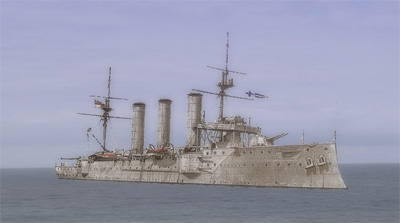
HMS Berwick
[Original artwork © 2004 Geoffrey
Miller] |
|
Geoffrey Miller
can be contacted by:
-
Telephone
- 01262 850943 [International:
+44 1262 850943]
-
Postal address
-
The Manor House,
Flamborough,
Bridlington,
East Riding of Yorkshire, YO15 1PD
United Kingdom.
-
E-mail
-
gm@resurgambooks.co.uk
|
|
|
 |
|
|
|
|
|
|